
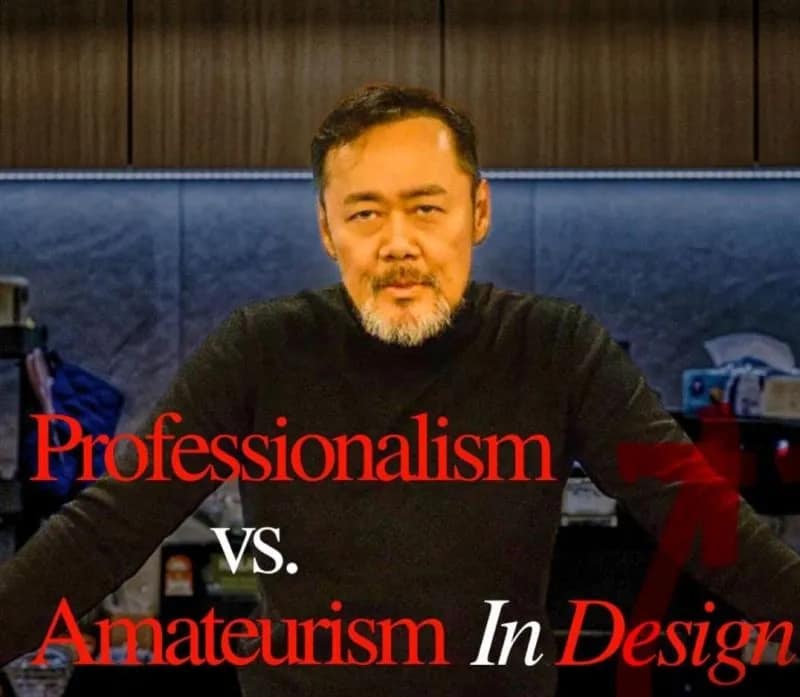
From my experience, there are clear and important differences between the two.
Amateur Design
Design is everywhere today, and it’s often treated as something anyone can do. With a few Pinterest boards, TikTok tutorials, or makeover shows, design can appear to be simply a matter of having “good taste.”
Amateur design focuses mainly on what looks good in a photo. A space may be visually appealing yet uncomfortable to use, poorly lit, unsafe, or impractical in daily life. It may impress on social media but fail in the real world.
Amateur designers often rely on personal preferences and trends. Decisions are driven by aesthetics first, without a full understanding of materials, ergonomics, safety, regulations, or long-term consequences.
The result is a design that looks good but doesn’t always work and, in many cases, leads to projects that eventually fail.
Professional Design
Professional design is not just styling; it is problem-solving. It requires critical thinking, technical knowledge, and a strong sense of responsibility.
A trained designer considers how people move through a space, how materials age, how lighting affects mood and productivity, and how safety, accessibility, and building codes influence every decision.
When done well, these aspects are often invisible, yet they are what make a space functional, safe, and truly livable.
The real difference is not creativity; everyone can be creative. The real difference lies in responsibility and depth of insight.
Professional designers are accountable for the long-term impact of their decisions on real people. They design with purpose, knowledge, ethics, and care.
Why This Matters
This distinction matters. Today, the design industry is increasingly blurred when it comes to differentiating between amateurs and professionals. When both are treated the same, the value of design is diminished. The skills, education, and responsibility behind professional practice become invisible.
If everyone is seen as a “designer,” the profession loses its meaning. And when that happens, design is no longer respected as a discipline that safeguards safety, functionality, and quality of life.
The Final Question
So the real question is not:
“Can you design?”
It is:
“Are you designing as a professional or as an amateur?”
Because design is about performance, longevity, and its impact on people—not just how it looks.
Ed Mun
#NoFreeDesignMovement